Saturday, December 10, 2005

Returning from Delhi

Finally, the departure from Delhi is at hand, after nearly two-and-a-half months in India. The blog posts will now be sporadic, till further travels beckon. But before signing off for now, here are some pictures of the Qutab Minar and Red Fort areas of Delhi.


The inscription on the 1600-year-old rustless Iron Pillar of Delhi near the Qutab -- most likely erected to honor Chandragupta Vikramaditya in Udaygiri and later carted to Delhi -- reads:

He, on whose arm fame was inscribed by sword, when in battle in the Vanga countries, he kneaded back with his breast the enemies who, uniting together came against him - he by whom, having crossed in warfare the seven mouths of the river Sindhu, the Vahlikas were conquered, he by the breezes of whose prowess the southern ocean is even still perfumed, he the remnant of the Great Zeal whose energy, which utterly destroy enemies, like the remnant of the great glowing heat of a burned out fire in a great forest, even now leaves not the earth, and gone to the other world, moving in bodily form to the land of paradise won by the merit of his actions, but remaining on this earth by the memory of his fame -- by him, the King, was attained sole supreme sovereignty in the world, acquired by his own arm and enjoyed for a very long time, and who, having a name of Chandra, carried a beauty of countenance like the beauty of the full moon, having in faith fixed his mind upon Vishnu, this lofty standard of the divine Vishu was set up on the hill called Vishnupada.

Friday, December 09, 2005

Kumaon


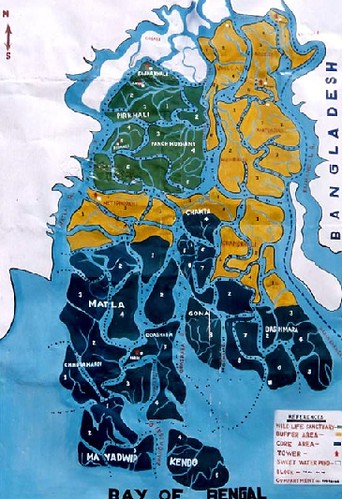
In the Siwalik hills of the lower Kumaon lies one of the world's foremost nature reserves -- Corbett National Park -- home to over 500 of the 1200 or so animal and bird species found in India. The park is named after Jim Corbett, the famous British hunter and writer, whose Man-Eaters of Kumaon and The Man-Eating Leopard of Rudraprayag are still worth a read. "Carpet Sahib" often reluctantly responded to villagers' requests for help to kill a man-eater, but in the end he shot more with his camera than with his gun.

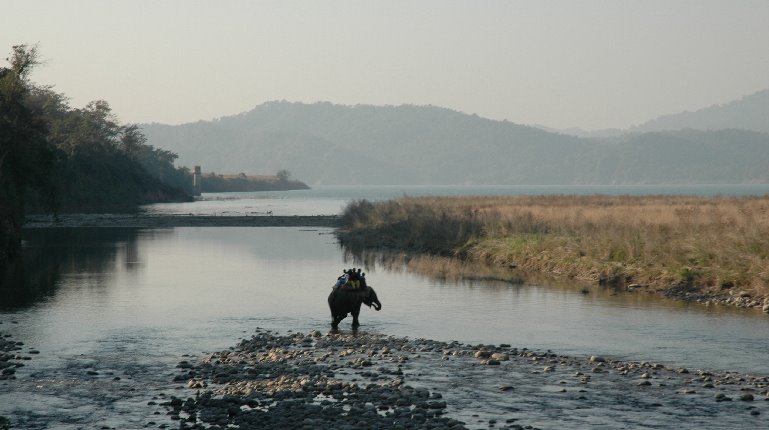
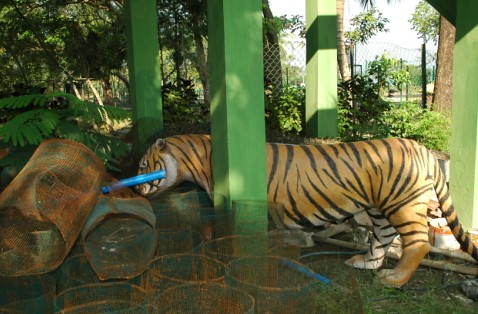
At the forest camp Dhikala deep inside the park, we see the Ramganga river flowing through magnificent stands of sal, rohini and haldu trees -- habitat for wild elephants, tigers, leopards, boars, deer like chital, sambhar, barasinga, alligators and crocodiles, monitor lizards, black bears and hundreds of species of birds.

Tuesday, December 06, 2005

Old Delhi


In 1675, Iftikhar Khan, Aurangzeb’s governor in Kashmir, was ordered to set about converting the Kashmiri Pandits to Islam by force. Those who would not succumb to the emperor’s pleasure fled for the Punjab. A delegation of the Pandits approached the ninth Guru of the Sikhs, Guru Tegh Bahadur and sought his protection. The Guru pronounced – Go tell the Mughal that we Pandits will gladly accept conversion if Tegh Bahadur the Sikh is persuaded to do so.

It is not clear what Tegh Bahadur thought the escalation steps would be, nor how he planned to negotiate with the Emperor. The Sikhs' military might was still quite nascent, and it is quite possible the Guru was carried away by the bravado of Dharma. Teg Bahaur's reply was duly conveyed to Aurangzeb, and orders were issued for his immediate arrest. Installing his son Gobind as his pro-tem successor, and taking leave of his family and followers, Tegh Bahadur began the journey to Delhi with three devoted Sikhs, the Bhais Mati Das, Sati Das and Dayal Das, in order to meet the Emperor. On the way, the Guru halted for the night at a village near Ropar. There he and his companions were taken prisoner and whisked away to Sirhind fort. After some months, they were brought to Delhi in chains. If you are a Guru, his captors asked, show us some miracle. That would amount to an interference with the work of God, Tegh Bahadur replied; He works in mysterious ways, if He wants to get involved He will.

The Emperor ordered torture. Mati Das, Sati Das and Dayal Das were brought to an open space in Chandni Chowk, where now stands a fountain. First, Bhai Mati Das was sawn across from head to loin. Bhai Dayal Das was pushed into a huge cauldron of boiling oil and Bhai Sati Das was roasted alive, with moist cotton wrapped around his body to prolong the agony. A chained, hanging Tegh Bahadur was made to witness the deaths of his companions. Convert and we will cease, he was told. After a few days of refusal, on November 11, 1675 at 11 o’clock in the morning, the Guru was brought to the open space and beheaded. His son Guru Gobind Singh, says in his autobiography Bichitar Natak (Strange Drama):

To protect sacred thread and forehead mark, in the dark age of Kali
He performed the supreme sacrifice, for the sake of Dharma
He gave away his life , without so much as a sigh from his lips
Gave his head, not his honor.


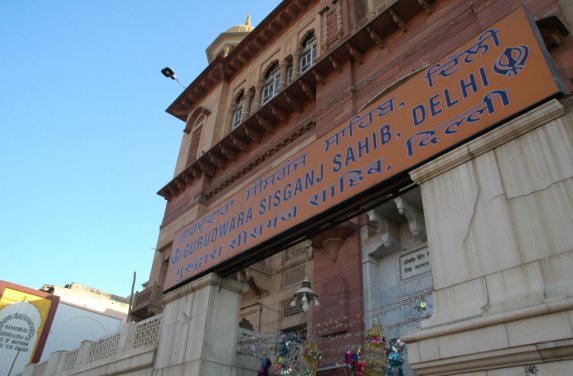
Sis diya par sir na diya. The area is today called Sisganj, and the gold-domed Sisganj Sahib gurudwara stands on the spot of the martyrdom of Guru Tegh Bahadur -- a stone's throw from the towering minarets of the Jama Masjid and the ochre ramparts of the Red Fort. Nearby is the famous Paranthey-wali Gali, where pure-ghee parantha bars stuggle to survive the onslaught of a new breed of fast foods -- the McDonalds 'Family Restaurant' stands across the street.

Monday, December 05, 2005

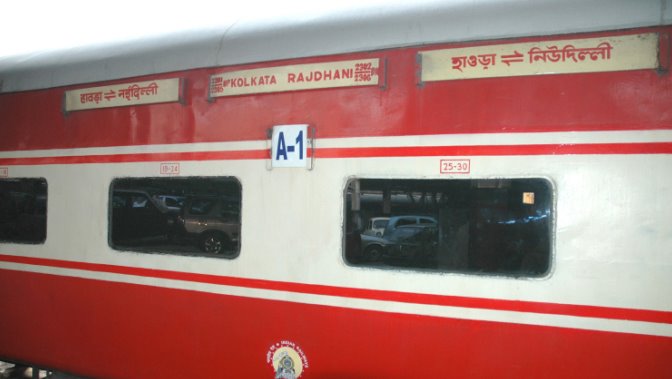
Rajdhani Express, Howrah to New Delhi


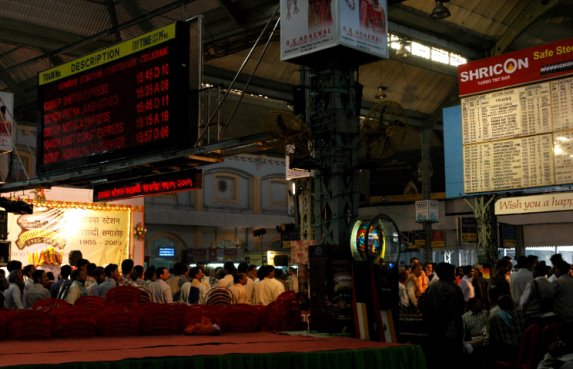
It is time to leave for Delhi. It turns out that Howrah station is celebrating its Centenary this week. Scenes of Howrah above.

Saturday, December 03, 2005

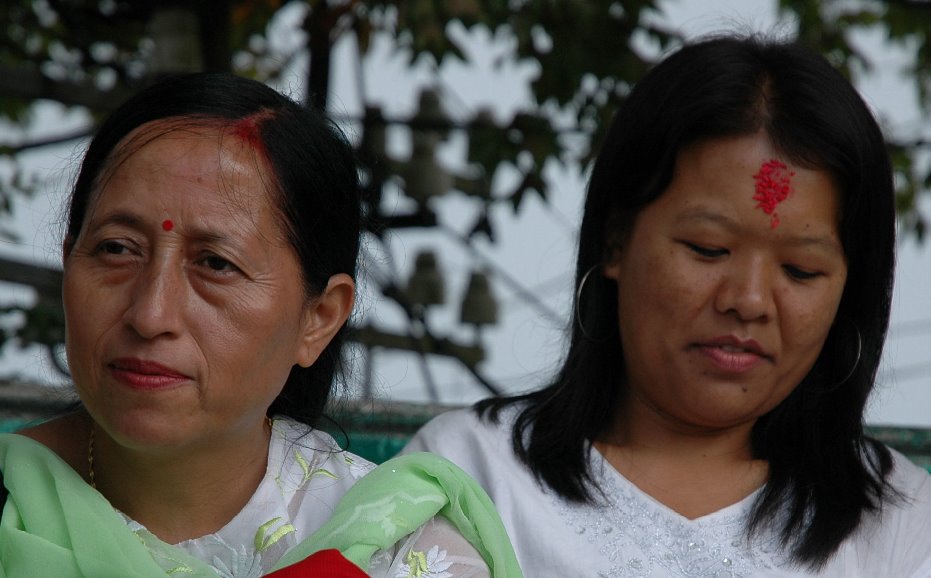
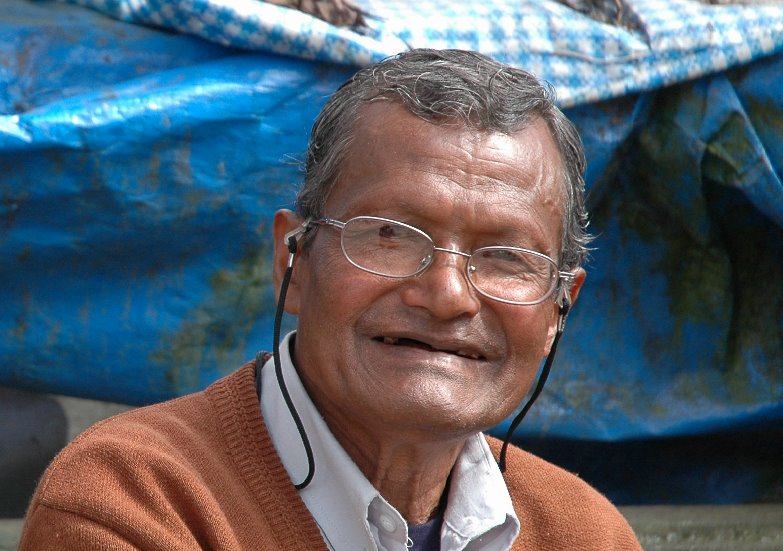
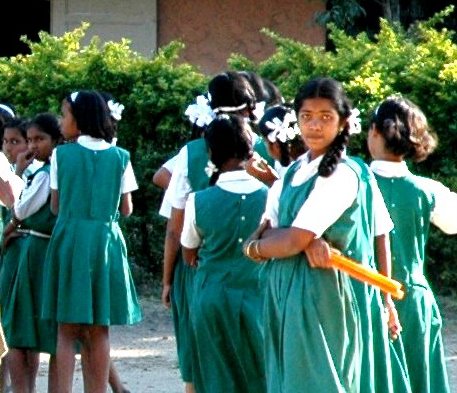
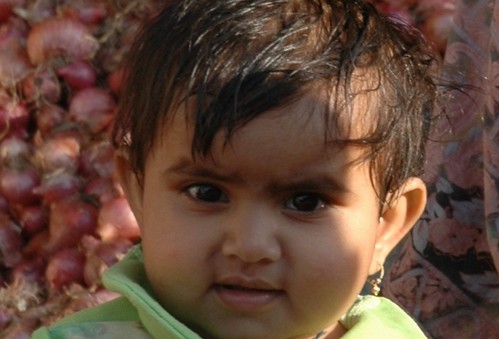
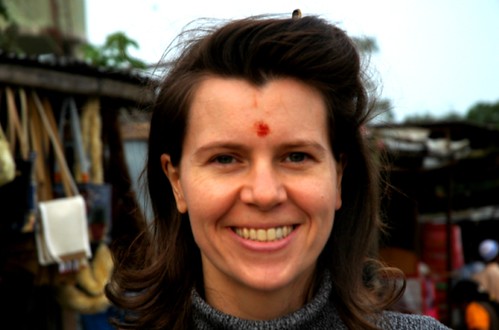
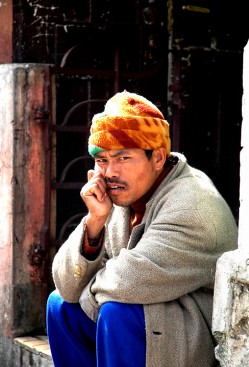
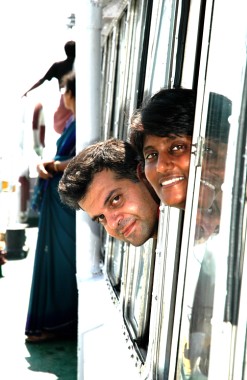
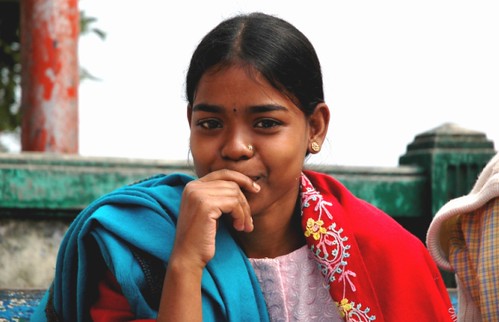
Faces: 4


Friday, December 02, 2005

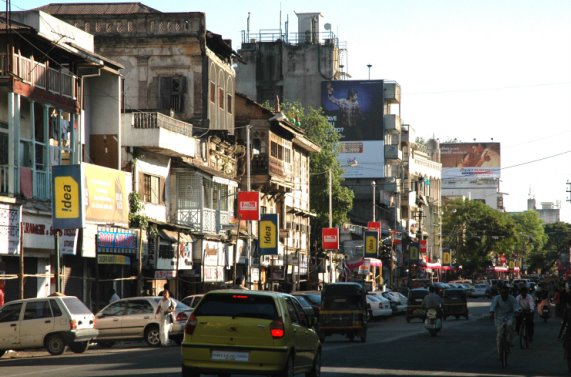
Calcutta Scene


Thursday, December 01, 2005

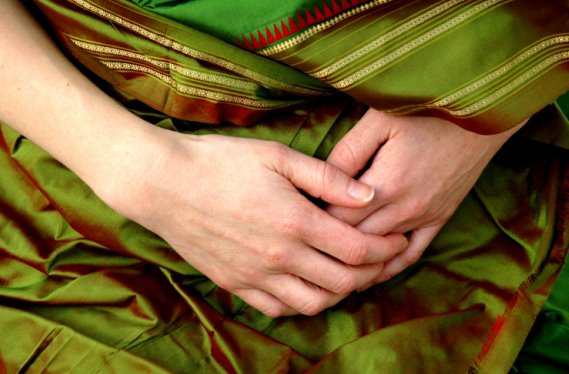
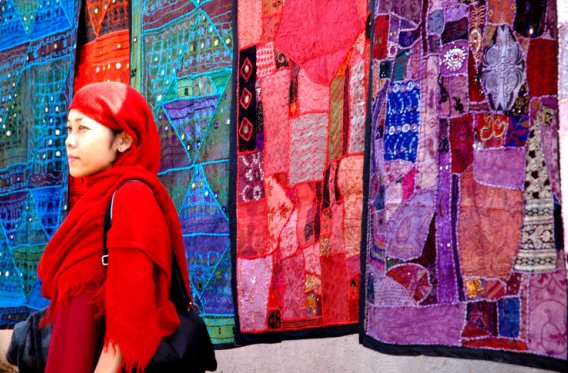
Calcutta Sarees


Tuesday, November 29, 2005

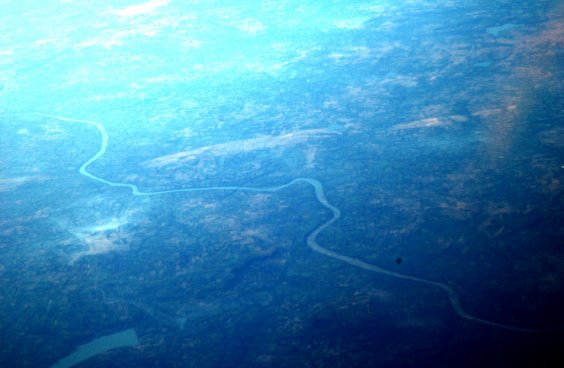
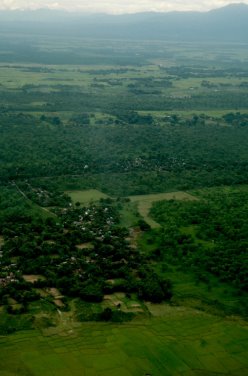
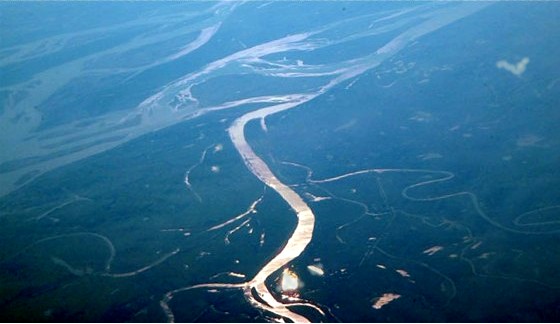
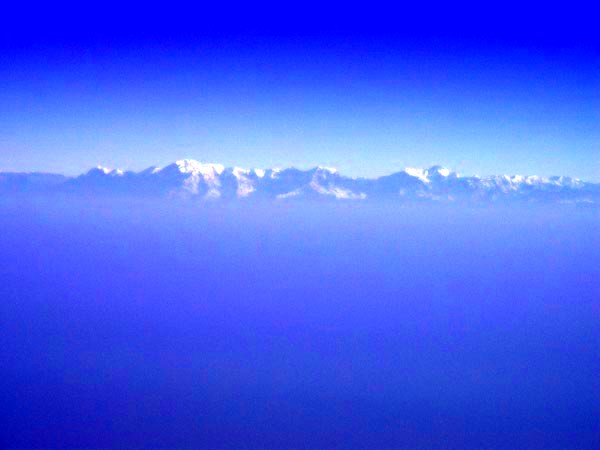
India from the Air


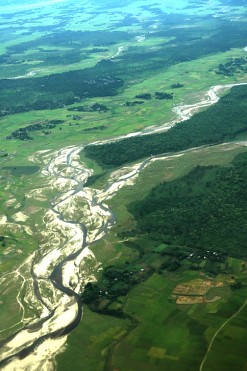
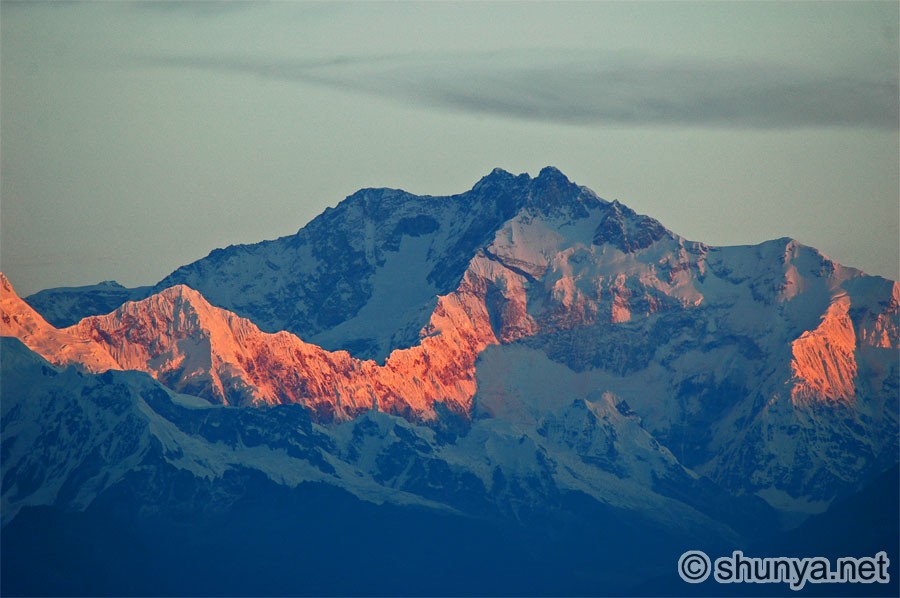
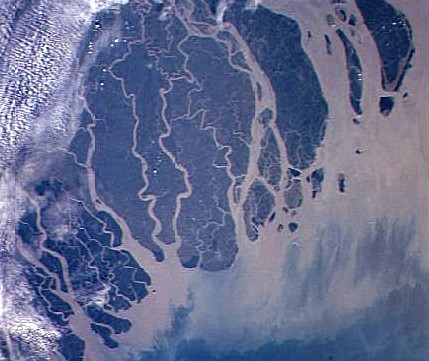
Juhu beach area, Bombay; Rajarhat just outside Calcutta; The Narmada River flowing through central India; The Kamtapur province south of Darjeeling; The Ganges Delta; The Himalayas; Mt. Everest, poking out of clouds in the corner.

Monday, November 28, 2005

Elephanta


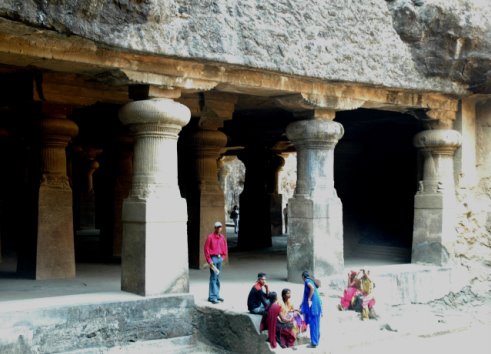
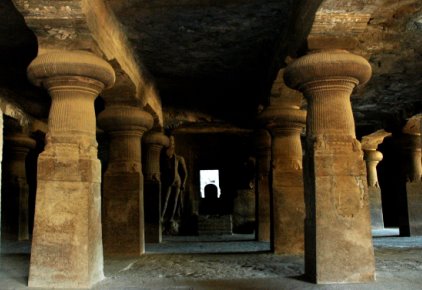
The mysterious carvings at the Elephanta rock-cut caves, on an island off Bombay about an hour’s ferry-ride away, are thought to be a synthesis of Chalukyan and Gupta art forms dating, it is thought, to the 4th century. We do not know who created them, how they were conceived or executed, why or when they were abandoned. The square pillars with rounded lotus capitals are distinctly Chalukyan, yet the sensuous grace of the carvings are closer to the Gupta renaissance after a thousand years of Buddhist-dominated subject matters.

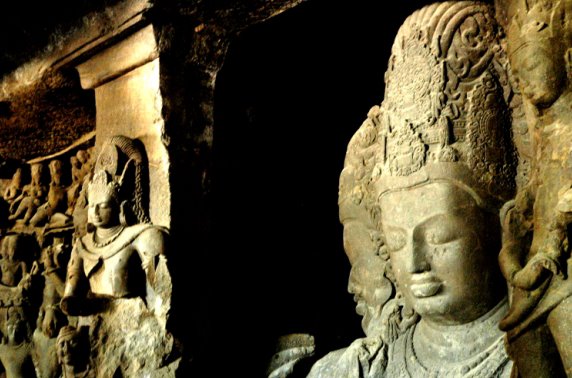
The towering Sadashiva – Eternal Shiva -- carving in Cave 1 at Elephanta has not been surpassed in Indian art. It is a colossal yet serene representation of the five-faced Shiva, whose three frontal aspects are visible as Mahadeva – the lord of the gods; Bhairava – the destructive aspect of divinity; and Vamadeva – the creative i.e. female aspect of Shiva. The fourth face is hidden from the viewer, and suggested to be a Nandi-borne Pashupati or lord of beasts. The fifth face of Shiva is transcendent, beyond human comprehension, and is never carved in the Hindu tradition.

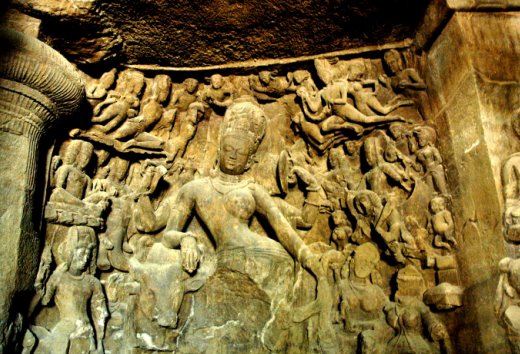
To your left as you face the Sadashiva is a carving of Ardhanarishwara – a half-male and half-female synthesis of divinity. The other gods pay homage to Shiva in this symbolization of the wholeness of creation – note Brahma borne by a flock of geese, next to Indra mounted on his elephant.

The carving on the other side depicts Ganga descending to the earth through Shiva’s locks. According to the Puranas, the king Sagar held an Ashwamedha Yajna, during the course of which the sacrificial horse wandered to the underworld. Its pursuers, attempting to capture it, disturbed the meditations of the sage Kapila who not only reduced them to ashes in the customary manner, but also cursed their remains. The only recourse for their spirits to be liberated would be for the Ganga to flow down from the heavens and wash away their sins. Sagar’s descendant Bhagirath did severe penances to engineer this, and Shiva agreed to assuage the torrent’s destructive force by filtering it through his hair.

In the carving, Ganga is three-headed, representing the Bhagirathi, Mandakini and Bhogvati tributaries above Shiva. Parvati is turned away a little, resenting Ganga as a rival for her lord’s attention, even as Shiva stretches a hand to reassure her.

The final major carving shows Shiva dancing the awesome Tandava to destroy the universe at the end of a kalpic cycle so that creation can begin anew. His left hand, the only one intact, raises the veil of illusion, so that the reality underneath Maya – Anandam or Bliss -- stands revealed.

Rudolph Otto (1869-1937)was a neo-Kantian philosopher, one of the most influential thinkers about religion of the last century, who is best known for his analysis of the experience that underlies all religions. He calls this experience numinous and says it has three components: Mysterium -- the wholly other, so entirely different from anything we experience in ordinary life that it evokes a reaction of silence; also Tremendum, that provokes terror because it presents itself as overwhelming power; and finally, the numinous presents itself as Fascinans, as merciful and gracious. Mysterium Tremendum Et Fascinans. Here's an extract from one of Otto's essays:

Eventually one's eyes find their way to the massive, main niche. Here towers an image of the deity that I can only compare with certain works of Japanese sculpture and the great images of Christ in old Byzantine churches: a three-headed form, depicted from the chest up, growing out of the rock, three times the size of a human being. To get the full effect, one must sit down. The middle head looks straight ahead, silent and powerful; the other two heads are shown in profile. The stillness and the majesty of the image is complete. It portrays Siva as the creator, the preserver, and the destroyer of the world, and at the same time as the savior and bestower of blessings. Nowhere have I seen the mystery of the transcendent expressed with more grandeur or fullness than in these three heads. When the little Indian guide who accompanied us saw how much the image affected us, he began to speak. He said (and it's quite believable) that the image changes its appearance according to the amount of daylight that filters into the great hall. Sometimes it's calm and massive, at others frightfully majestic, at still others it's smiling and benevolent. It has stood there like this for perhaps a thousand years, abandoned by its faithful. When one turns around, one looks through the entrance of the cave, across the antechamber, and out onto the gray-blue sea and at the opposing, wooded peaks. Thus, the face of the creator surveys his handiwork. To see this place would truly be worth a trip to India in itself, and from the spirit of the religion that lived here one can learn more in an hour of viewing than from all the books ever written.

[From Rudolf Otto, Autobiographical and Social Essays, ed. Gregory D. Alles (Berlin: Mouton de Gruyter, 1996). ]

Sunday, November 27, 2005

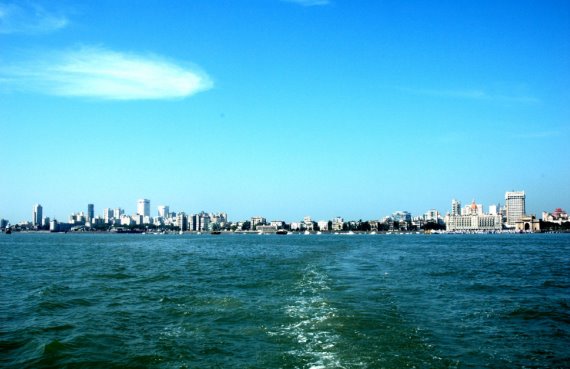
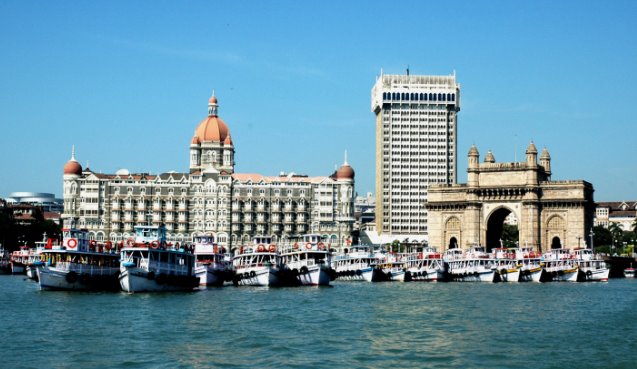
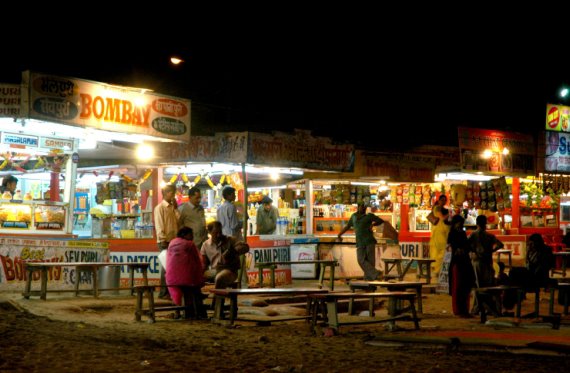
Bombay


Friday, November 25, 2005

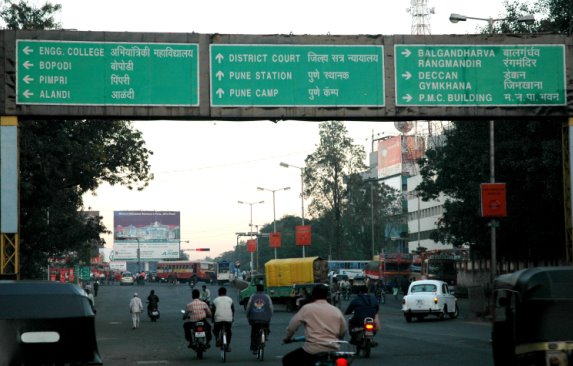
Pune


We ask to be taken to the BKS Iyengar Yoga Institute in Pune. It is off the beaten track, and not an easy place to find, housed in a nondescript compound in the residential neighborhood of Model Colony. The auto-driver hears 'yoga', and, mapping it to his customary fares, deposits us by-and-by at the foot of the Rajnish 'Osho' Ashram, where a streetful of Israeli, Japanese and French sannyasins are kicking up a fine old caterwaul -- dancing, spinning arms upraised like dervishes, screaming, yelping and otherwise loudly proclaiming their one-ness with the cosmos. It turns out some elderly Ashram personage has shuffled off her mortal coil, and they are giving her cortege a befitting sendoff. After they pass, peace descends to Koregaon Park, leafy again under banyan trees.

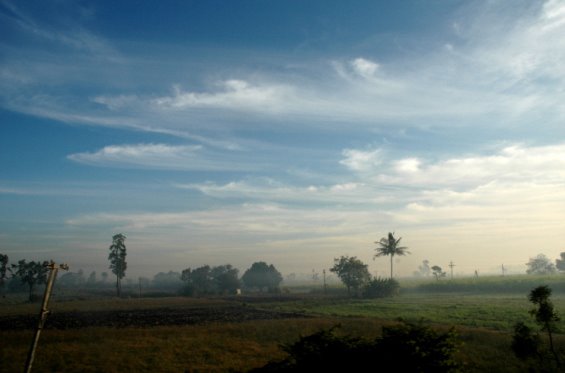
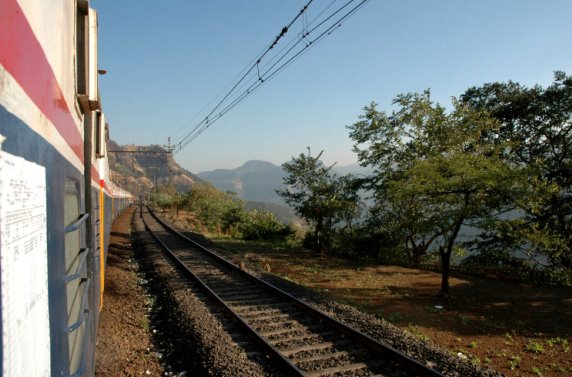
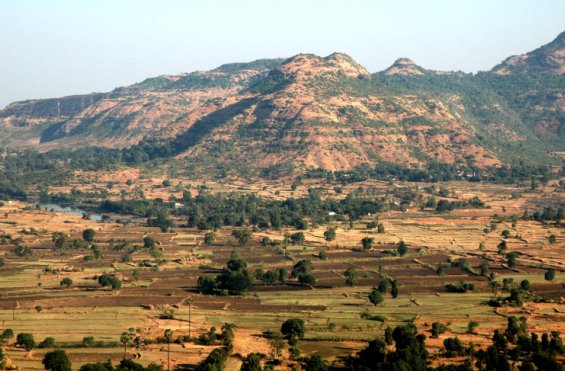
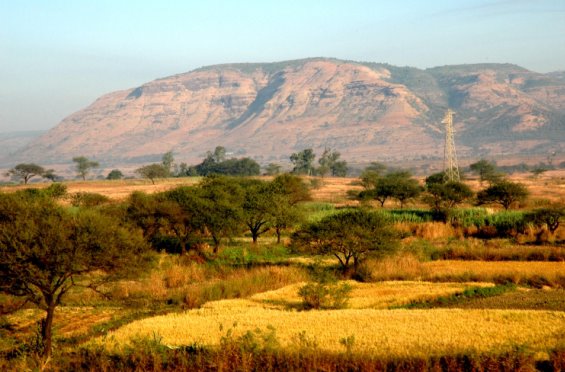
The Deccan Queen leaves Pune for Bombay VT -- Chhatrapati Shivaji Terminus -- in the early morning. We cut through tunnels and switchbacks for breathtaking Deccan vistas as we descend to the sea level.


Tuesday, November 22, 2005

Gooty, Guntakal, Raichur


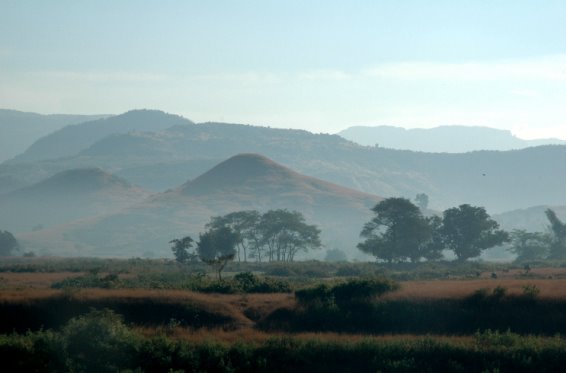
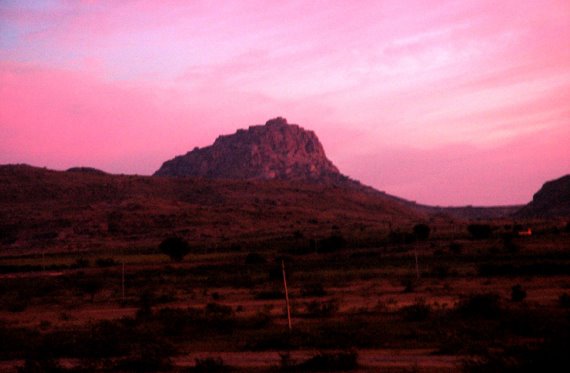
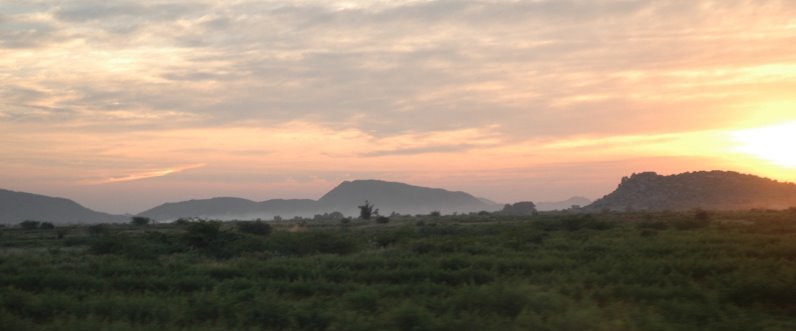
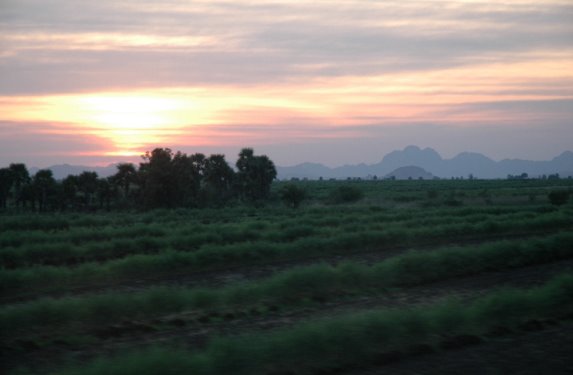
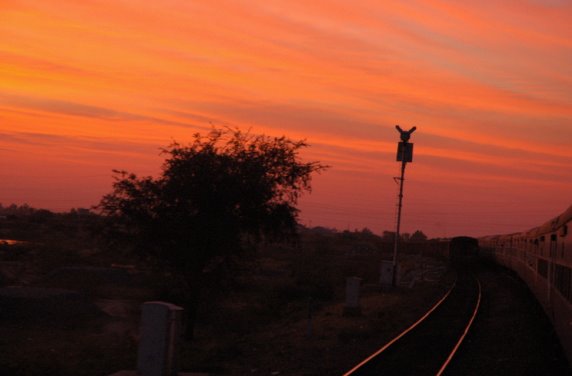
The dust in the air makes for riotous sunsets, best viewed from the Kurla Express as it meanders through the land -- the last one I remember of this vividness was in Tucson.

The fortress rock at Gooty is about 2200 ft. above the sea level. The Gooty fortress was a stronghold of the Marathas, but was taken from them by Hyder Ali; in 1789 Tipu Sultan ceded it to the Nizam of Hyderabad. In 1800 the Nizam ceded the district of Anantapur with certain other areas to the East India Company in lieu for protective British forces.

Saturday, November 19, 2005

Faces: 3


Friday, November 18, 2005

Choudhury Palace -- Ramdeo Hotel


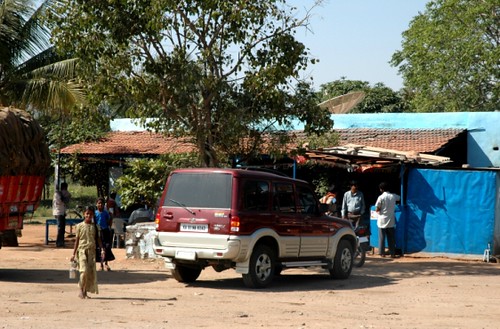
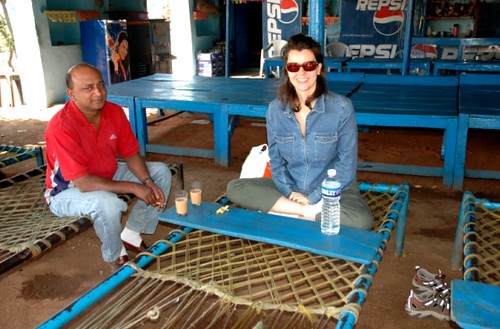
The best dhabas are invariably North Indian. On Karnataka highways, the sons of the soil seem to have struck up deals with state transport buses – the driver gets his jeera-bath for free, the passengers pay; as for retail customers, it is easier to turn them away with a surly ‘illa’ than bother to fry a samosa or two.

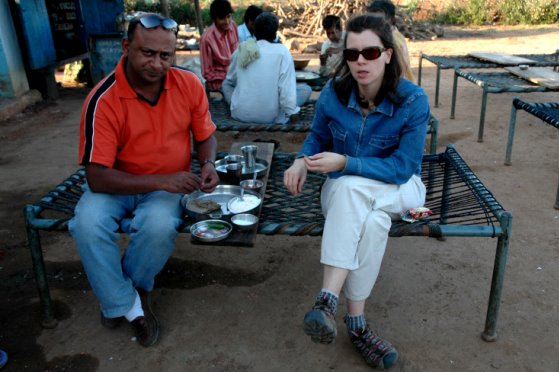
What a pleasant surprise, then, to come to Choudhury Palace owned by Danaram and run by Ramdeo from Barmer. It is 5pm, his tandoor is not fired yet; but he sheepishly asks if poor-peoples’ food will suffice – he can make thick, chewy bajra roties on his tawa, serve them with home-made yogurt, perhaps also dab some ghee on the side, dice onions and tomatoes for a salad, and brew up steaming glasses of tea. If you can chat about Barmer, Jodhpur or Bikaner, the meal is free.

Thursday, November 17, 2005

Road Hazard

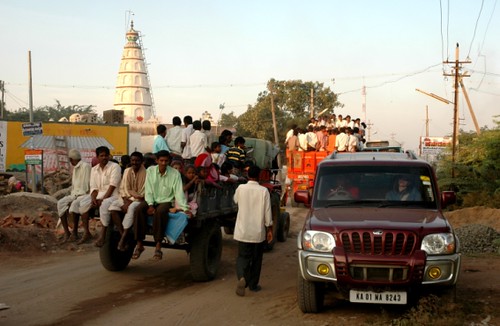
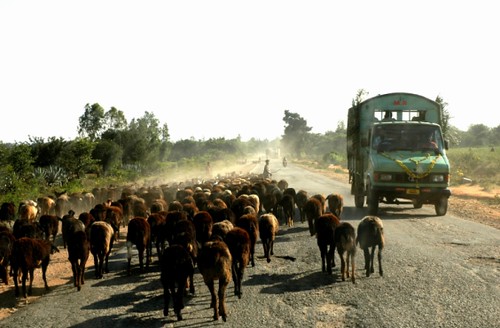
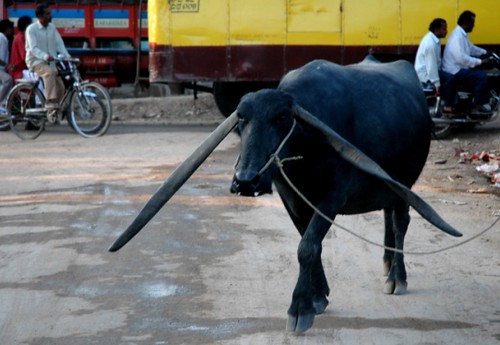
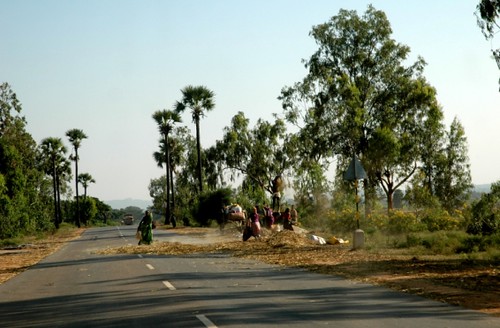
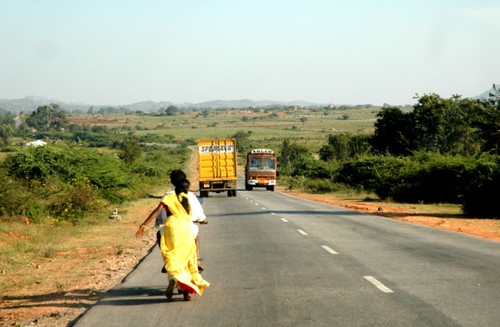
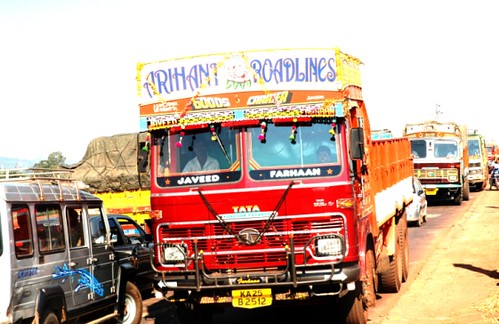
There is one good reason why you don’t drive on an Indian highway at night – the drunk driver behind the wheel of an overladen truck without any lights coming roaring at you on the wrong side of the road. As for driving during the day, there are at least a dozen good reasons why you should Honk Please and remember Hurry Burry Spoils The Curry. Here are the top 12; hang on to your hat, Dorothy, Kansas is gonna go bye-bye:

1. Crowded Roads


2. Thundering Trucks


3. Traffic Jams


4. Potholes


5. Washboard/ No Surface


6. Dust


7. Sheep


8. Water-buffalo


9. Grain-threshing


10. Motorcycles and Bicycles


11. Onions


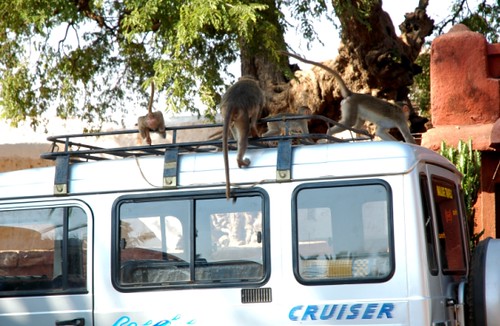
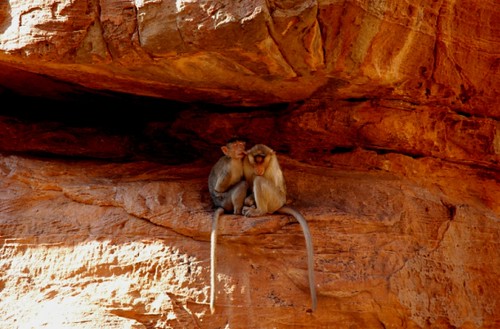
12. Monkeys and other Mayhem

Wednesday, November 16, 2005

Chitradurga


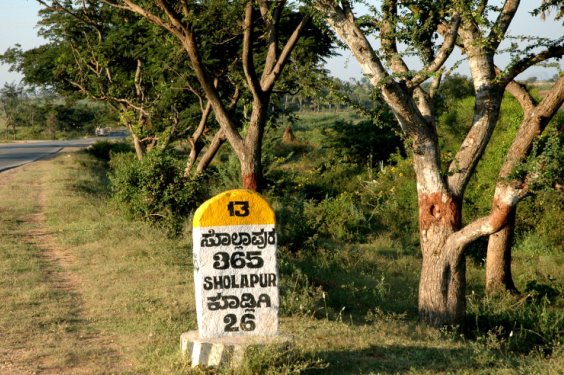
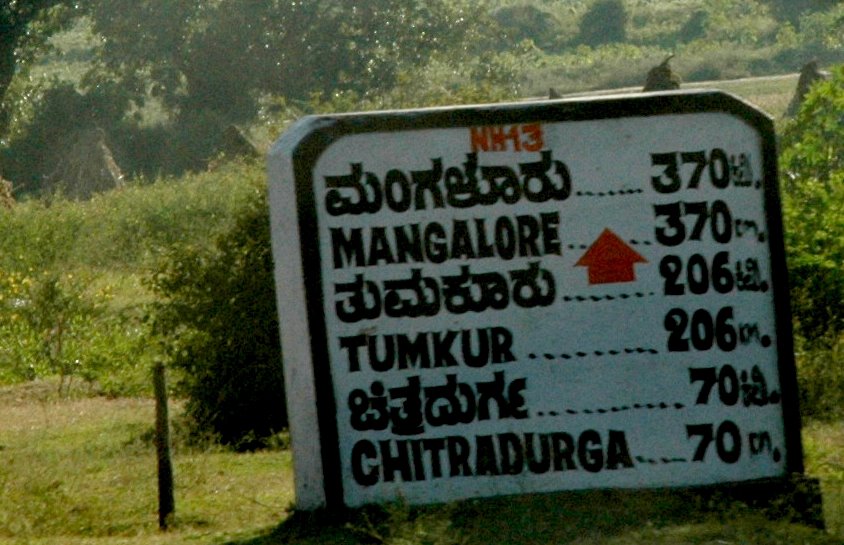
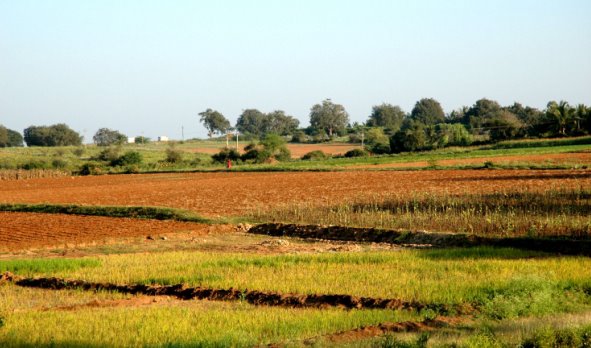
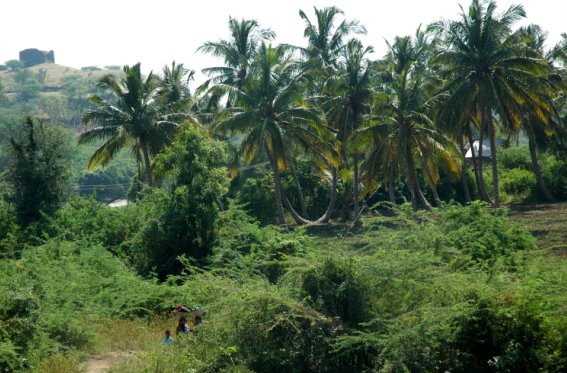
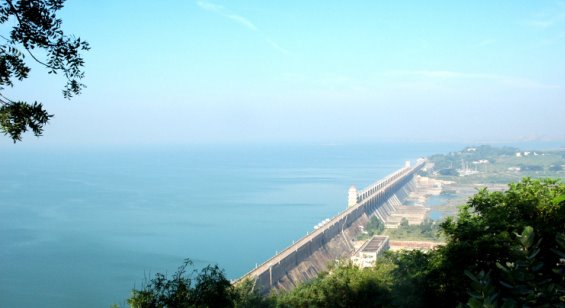
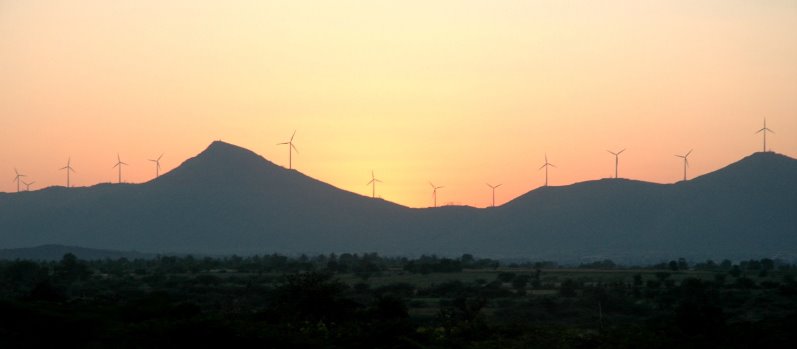
Above: Chitradurga milestone; Chitradurga hills; small-holding fields; trees beside the Vedavati river; sunflower fields; papaya-plantation; the Tungabhadra Dam; wind-farm over Chitradurga.

Chitradurga gets its name from Chitrakaldurga, an umbrella-shaped hill which is fortified. It lies in the valley of the Vedavati river, and the Tungabhadra flows to the northwest. In the Mahabharata, a man-eating gaint named Hidimbasura set up shop on the Chitradurga hill and caused general mayhem. When the Pandavas were wandering around during the course of their exile, Hidimba spied them and sent his sister, Hidimbi, to bring him their meat for food. Hidimbi was, alas, smitten by the beauty of Bhima and warned them about her brother. When a hungry Hidimba appeared in person, a battle ensued. Hidimba was killed by Bhima, who married Hidimbi, and had a son named Ghatotcacha by her. Ghatotcacha figures prominently in the plot-line of the battle of Kurukshetra, for to kill him Karna has to use the special astra he'd reserved for Arjuna. Thus the dark and uncouth has to be sacrificed for beauty and fairness.

As we pass through this iron-ore- and forest-rich land, now sprouting on the one hand high-tech BSE-traded corporatized wind farms, vast sunflower fields supplied from the Tungabhadra-Sagar Dam for the Sundrop-branded oils, and papaya plantations, as well as Naxals on the other, one reflects upon the history of power and disparity in these rural areas in the last few centuries.

The Sepoy Mutiny is considered India's first war of independence. While in its broadest sweep it was the greatest armed challenge to colonial rule during the course of the nineteenth century, a close reading of history reveals that following the collapse of the Maratha power and the first 'pacification' of Indian princes, the countryside was almost continuously in insurrection till the conflagration of 1857. 1799-1856 was not a period during which Indians accepted Company rule passively. This was not Pax Britannica, but Tax Britannica, and perhaps Axe Britannica as some historians have said. Numerous uprisings by peasants and tribal communities and princely states confronted the policy of unchecked colonial extraction of agricultural and forest wealth from the region. This period saw tremendous growth in rural poverty in India, which provided tinder for many peasant revolts.

One of the earliest rebellions was the Sannyasi rebellion -- hungry peasants of Bengal and Bihar, victims of a terrible famine in the 1770s, rose in revolt against the East India Company, which had been exacting money and crops from them after Plassey. Another was led by Dhondia Waug of Shimoga who briefly liberated Shimoga, Chitradurga, Dharwad and Bellary in 1799, a few months after the defeat of Tipu. Rani Chennamma led a revolt in the Kittur region in 1824, followed by Sangoli Rayanna's guerrilla war in 1829. In other parts of India there was the Ho revolt of the 1830s; the Oraon revolts of 1820, 1832, 1890; the Kol Uprising of 1831; Sidhu-Kanu's Santhal Uprising of 1855; the Kutch Rebellion of 1816-1832; Titu-Mir's Wahhabi rebellion in Bengal of 1833, and so on.

"Dhondia belonged to Shimoga though he was a part of Tipu's army he was imprisoned in 1794, having ambitions to set up his own kingdom. On the fall of Srirangapatnam he was set free with the other prisoners. He immediately contacted the other sardars in the service of Tipu and formed an army. He declared himself king of Shimoga. He then went about planning the overthrow of British power in Mysore. The book says: "Starting his military offensives in June 1799 itself, only two months after Mysore's fall, Dhondia gained possession of extensive territory which included most of Shimoga, Chitradurg, Dharward and Bellary districts within a year". His forces grew within a year from 200 cavalrymen to 80,000 at its peak. He never gave battle in the forts maneuvering his forces in the countryside gaining new recruits in the process. "Dhondia was obviously adopting the tactics of mobile warfare, using an extensive terrain that stretched across a few thousand square kilometers of woods, valley and plains; preferring field operations to that of cloistered warfare. Ironically it was the massive growth of his forces that led to his downfall as he was then unable to use guerrilla warfare effectively. On Sept 10, 1800 Dhondia died giving battle to the British on the banks of the Krishna."

The Vellore insurrections was a revolt of the disaffected soldiers of the British army -- most of whom were from the oppressed castes. Tipus sons were incarcerated in the jails there. In the first offensive 14 British officers were killed and 76 injured. It was the first time in India that sepoys had revolted and killed their own European officers. In retaliation the British used extensive brutality massacring over 800.

Regarding the second type of armed rebellions they were mostly of the small feudatories who were deprived of their kingdoms who rose in revolt in Aigur, Koppal, Bidar, Bijapur, and the most famous one of Chennamma in Kittur in 1824. The Kittur garrison had a large force. On behalf of the British Thakeray sought to enter with a force of 250. They were not allowed to enter. Chennamma decided to attack them at the gate itself. In a surprise attack she annihilated the entire force and took 40 prisoners. But latter in battle she was caught and imprisoned, dying at a young age in 1829.

But these wars by the feudatories continued in many places with a notable one being in Bidar in 1852.

But the most significant uprisings were of the third category of the peasants that targeted both the feudals and the colonialists. The book traces three major uprisings -- that of Sangolli Rayanna's guerrilla war (1829-30) again around Kittur area; the Nagar peasant Insurrection (1830-33); and Kalyanaswamy's Armed Uprising (1837) of Kodagu area.

The Kittur principality encompassed parts of Belgum, Dharwad, and Uttara Kannada districts and was covered on its western part by the Malnad forest tract. Sangolli Rayanna had joined Chennamma's army. But his lands were confiscated, and of what remained it was heavily taxed. He taxed the landlords and built up the army from the masses. He used guerrilla methods to attack government property; burnt land records and extracted the loot from notorious landlords and bureaucrats. Finally he was captured and hanged. At the time of being hanged he said "My last wish is to be born again in the country to fight against the British and drive them away from our sacred soil".

The Nagar was a wide scale peasant insurrection that had spread to various parts of Karnataka. From Shimoga and Chikmangalur it spread to Uttara Kannada, Chitradurg, Tumkur, Hassan, Mysore, Mandya and Bangalore. Like with the Sangolli uprising, in the Nagar revolt the peasantry located its anti-feudal anti-colonial aspirations within a political framework. They recognized Budibasappa Nayaka as the heir of the Ikkeri kings and sought the restoration of Ikkeri rule over Nagar.

The struggle took place in three waves: The first was that of mass struggles; the second, of mass action, and, the third, when armed struggle predominated.

The mass struggle started in early 1830 and assumed a host of forms. The most important of these was the "koota" or simply "gathering". The koota was a broad forum to organize the peasant masses. The kootas spread from Nagar (town in Shimoga district) to Bellary, and even as far as Mysore. Budi Basappa, a cultivator was its leader, who claimed the Gadi of Nagar. He appointed Manappa as his "commander-in-chief. As the movement built up on Aug. 23 1830 at a huge rally, a peasant charter was passed and signed by those assembled. It said:

· The peasant organisation must be built everywhere.

· The struggle must be advanced till the demands are accomplished.

· Government officials must be prevented from entering the village.

· Revenue payment to the government must stop.

· The government must recognize that the "tiller is the owner" of land.

· Land must be returned to those tenants who had forfeited it.

And as the movement gained momentum it changed to forms of mass actions -- officials, bureaucrats were attacked. Manappa built up a fighting force of 200 men. As the book recounts: "The mass actions which were directed against the Amildars, corrupt bureaucrats and reactionaries in the villages. Amildars who feared the wrath of the people either fled or surrendered to the groundswell. By the end of 1830, as the phase of mass action began to conclude, they often culminated in the seizure of the Amildar's offices by the insurgent peasants and the collection of all revenue was annulled by the new authority in power."

Then from Dec.14 1830 began the Raja's reign of terror, which resulted in the peasant movement taking the form of guerrilla war. A guerrilla army was built with detachments varying in size from 20 to 200. The norm was 40. They beat back the raja's offensive. They captured the Nagar fort; but retreated into the forests on the night before British troops entered. As a major section of enemy forces moved to other areas of combat, they attacked the fort, killed its occupiers and re-took it. In this way the Nagar fort changed hands six times. Each time they appealed to the towns people who joined them in large numbers. The guerrilla army was given secret training in Brahmagiri, Ulavi, Chennagiri, Chandragutti, Sonale and Sasehwalli. As the battles intensified enemy troops mutinied and joined the guerrillas. Enemy officers were targeted.

The British were unable to stem the growth of the armed struggle. Finally they were able to crush it by infiltration and killing of the leadership. By 1833 the bulk of the leadership were captured and killed and the movement died down."


(From http://www.peoplesmarch.com/archives/2004/aug2k4/book.htm)


Tuesday, November 15, 2005

Badami


The Chalukyas rose to power in the Deccan from the fifth century and ruled till the eighth; and again in the tenth, to last till the twelfth century. They reigned over the area between the Vindhyan mountain-system and the river Krishna, i.e. western Maharashtra and northern Karnataka. “In the course of his wanderings around India, [the Chinese sage] Hsuan Tsang traversed an area of the western Deccan which he calls ‘Mo-ho-la-ch’a’. The translation of proper names from Chinese back into Sanskrit often stretches credulity, but in this case there is little room for doubt: by ‘Mo-ho-la-ch’a’ Hsuan Tsang meant Maharashtra … [he] found the soil rich and fertile, which in parts it is; the people were honest but implacable, and they included ‘a band of champions’ who, when both they and their elephants were fired up on alcohol, proved irresistible in battle. ‘No enemy can stand before them’, wrote the visitor, wherefore the king was able to ‘treat his neighbors with contempt.’ The name of this contemptuous sovereign was given as ‘Pu-lo-ki-she’, otherwise Pulakesin II.” (John Keay, India: A History.)

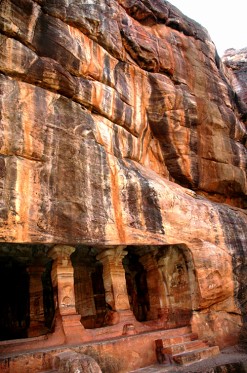
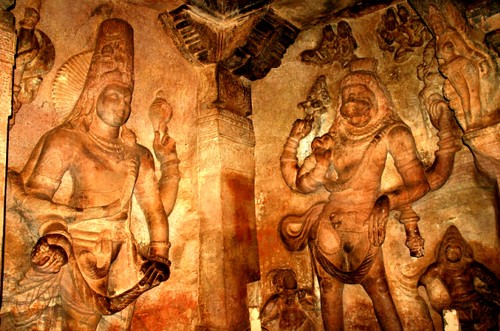
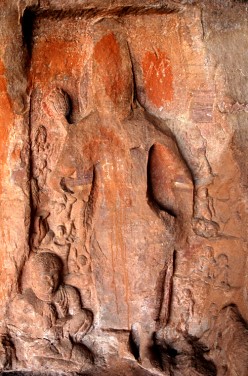
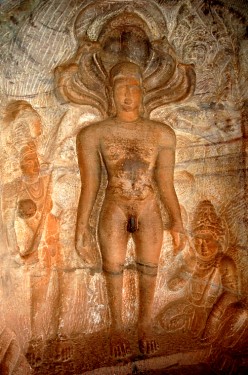
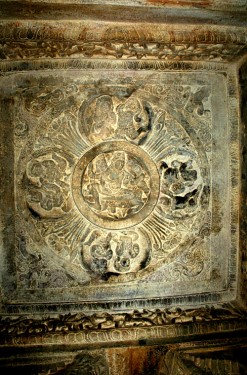
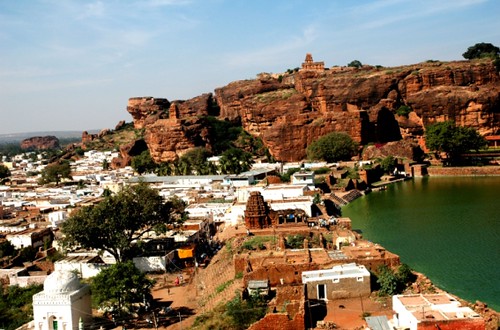
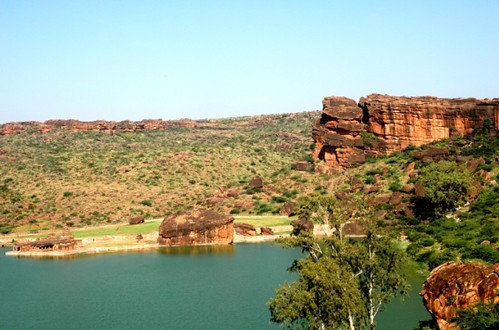
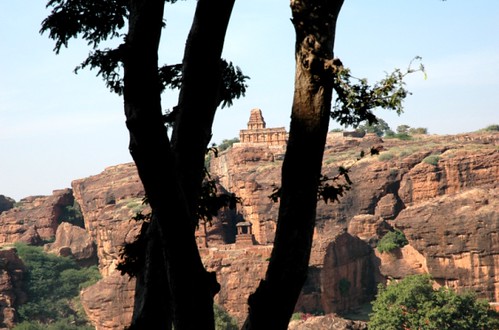
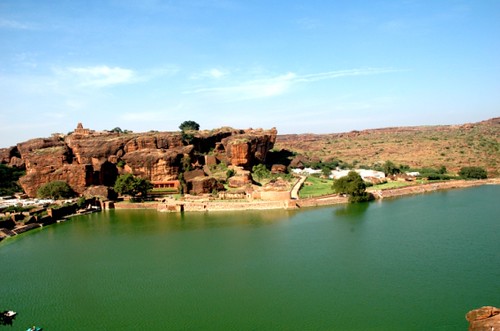
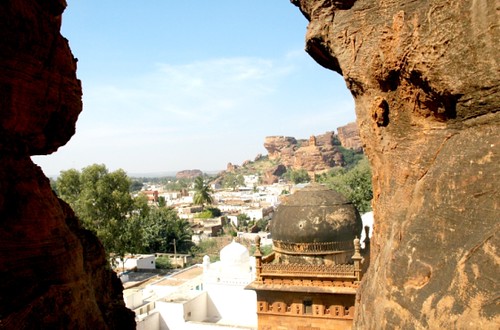
Pulakesin II, who was contemporaneous with Harshavardhan and bested the monarch of Kanauj in a defensive war, was the grandson of first great ruler of the Chalukya dynasty, Pulakesin I, the founder of Vatapi (the ancient name of Badami.) The rock-cut temples at Badami were built between 547 and 630. They span four caves on a vertiginous cliff-face. The first (lowest) is dedicated to Shiva; the second and third to Vishnu; a track leading up between the caves contains a shrine to the Padmapani Buddha (now defaced); the fourth to Mahavira and the Jain tirthankars. The caves overlook a lake, freestanding temples built later in Chalukyan rule, and the town of Badami.

The Chalukyas of Badami were defeated by the Rashtrakutas in 743. Another branch from Kalyan arose in the tenth century, and in its time it was succeeded by the Kalachuris, the Yadavas of Devagiri and finally the Sultanate of Bijapur.


Vijayanagar

তুঙ্গাভদ্রার তীরে


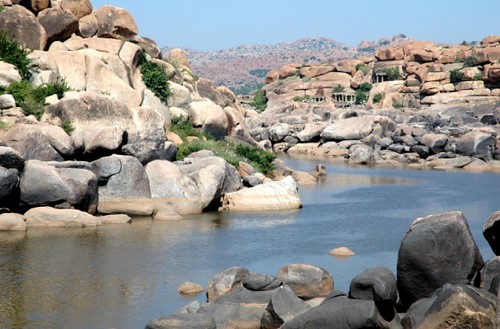
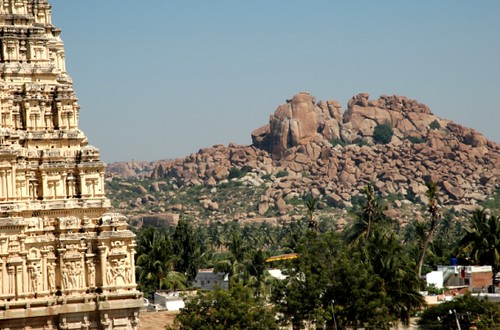
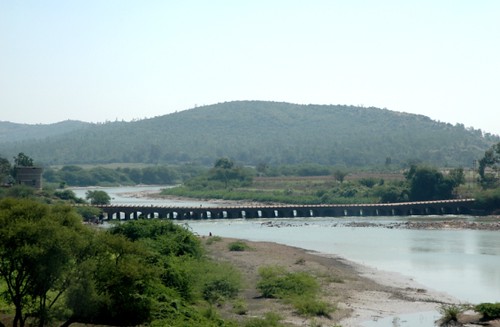
The magical boulder-strewn landscape on the banks of the Tungabhadra hosts one of the largest open-air museums of the world and a UNESCO World Heritage Site – the 600-year-old ruins of the last great Hindu kingdom – Vijayanagar -- which for two centuries resisted the Islamic conquest of South India.

Vijayanagar – Victory City – was founded around 1336 by Hakka and Bukka, two brothers from the Sangama-Kuruba clan.One version of the founding myth says they were abducted in their youth by the Sultan Muhhamad bin Tughluq, who, after defeating the king of Warangal took Hakka and Bukka as prisoners of war to Delhi, where they were converted to Islam by force. The brothers escaped vowing to preserve Hindu culture and heritage deep in a Southern stronghold, and, under the guidance of the sage Vidyaranya founded the Vijayanagar Kingdom from amongst the remnants of the Hoysala kingdom.

That Hakka and Bukka hailed were legitimate successors to the old Hoysala sovereignty by some organic process is supported by other evidence – they became overlords of the entire communities formerly ruled by the Hoysalas without any clash for the transfer of power; they followed the Hoysala framework in all political and administrative matters; etc. According to another story, Muhammad bin Tughluq made one Harihara, son of Sangama, who was previously a notable of Anegondi, his governor there; the dynasty sprung from this grant. Yet another version states that the brahmin Vidyaranya himself founded Vijayanagar after the discovery of a hidden treasure, ruled over it himself, and left it upon his death to a Kuruba family who established the first regular dynasty. And so on.

The power of Vijayanagar maxed under Krishna Deva Raya (1509-29), who controlled nearly the whole of peninsular India south of the Krishna and Tungabhadra rivers. The capital was comparable to Delhi in size and prestige with an estimated population of half a million, deriving its revenues from control of the southern spice and cotton trade. Its busy bazaars were described by European travelers as centers of international commerce. Vijayanagar’s gold coins were current in an arc from Arabia to Indonesia. It ‘seemed to me as large as Rome, and very beautiful’, wrote a Portugese visitor of the capital.

[The] king is of medium height, and of fair complexion and good figure, rather fat than thin; he has on his face signs of small-pox. He is the most feared and perfect king that could possibly be, cheerful of disposition and very merry; he is one that seeks to honor foreigners, and receives them kindly, asking about all their affairs, whatever their condition may be. He is a great ruler and a man of much justice, but subject to sudden fits of rage, and this is his title ‘Crisnarao Macacao, king of kings, lord of the greater lords of India, lord of the three seas and of the land.’ He has this title because by rank he is a greater lord than any by reason of what he possesses … but it seems that (in fact) he has nothing compared to what a man like him ought to have, so gallant and perfect he is in all things.

(Domingo Paes quoted in Noboru Karashima, Towards a New Formation: South Indian Society under Vijaynagar Rule.)

The impact of the Portugese pirates like Vasco da Gama caused a great upheaval in the economics of maritime commerce of spice and cotton, and this impacted the revenues of Vijaynagar. The last king, Rama Raya, tried to divide and manipulate his neighbors, the Deccani Sultanates, to only temporary avail and considerable backfiring. They finally banded together and the forces of Vijayanagar lost the battle of Talikota in 1565 against a confederacy of Berar, Bidar, Bijapur, Ahmednagar and Golconda. The king was beheaded; his city was sacked and left in ruins.

The loss of Vijayanagar resulted in the opening up of southern India for Muslim conquest and its fracturing into smaller states – Mysore was one – that were at constant internecine war with each other, leading ultimately to a successful divide-and-conquer by the British.

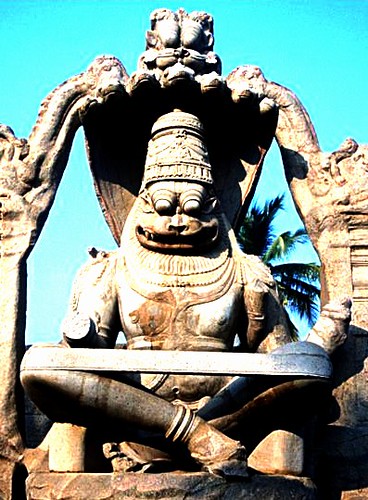
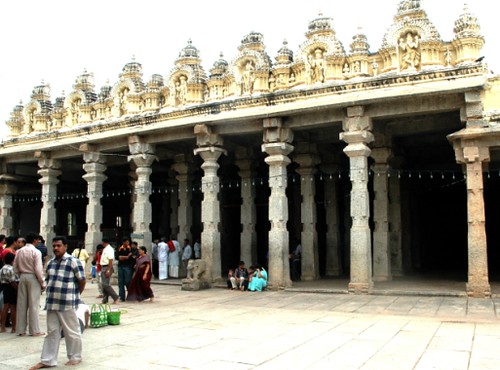
The major temples are dedicated to Virupaksha and Vitthala; there are shrines to Pampa and Bhuvaneshwari, statues of Ugra-Narasimha, Nandi and Ganesh; the Hazara-rama temple; the hilltop village of Anegondi across the river, the birthplace of Hanuman and the nearby site where he is supposed to have kept Sita’s jewels for safekeeping; Bali’s funeral pyre; and about 80 other sites maintained by the Archaeological Survey of India.

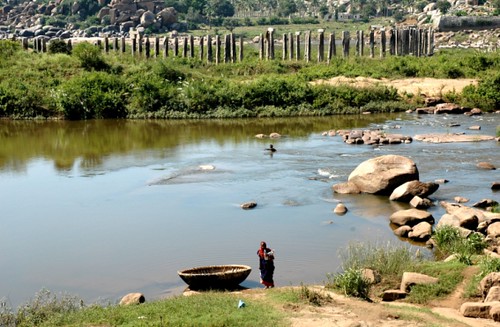
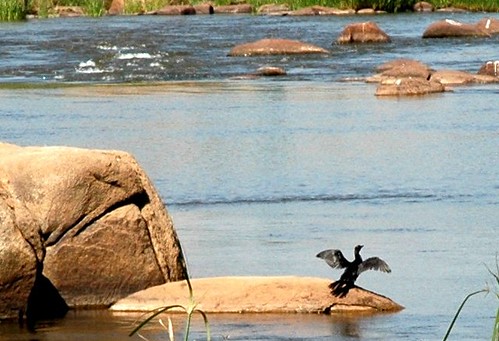
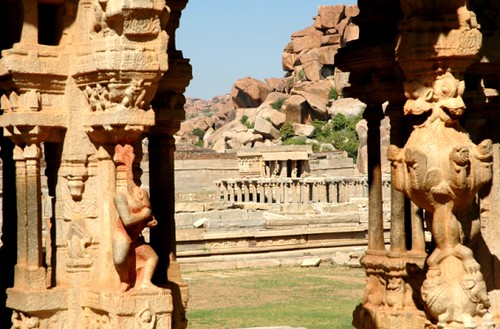
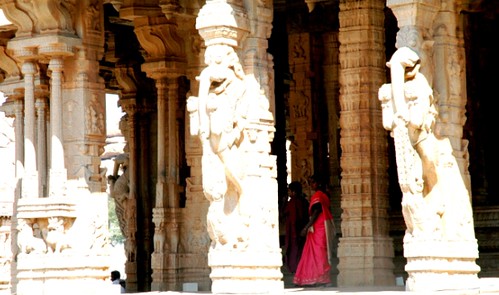
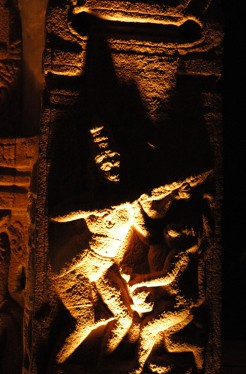
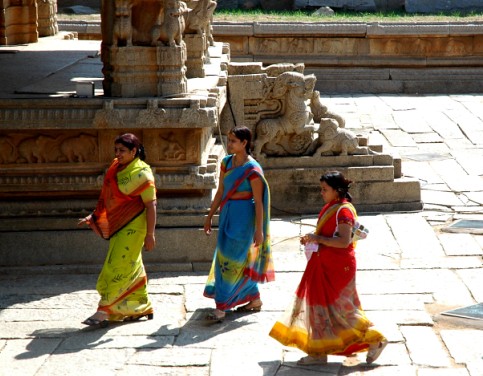
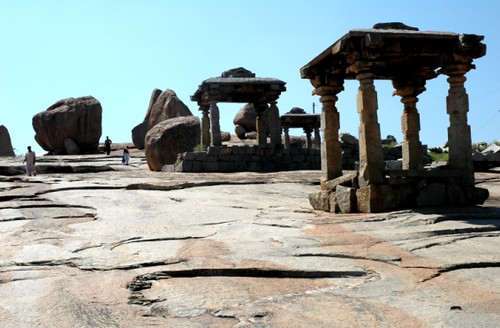
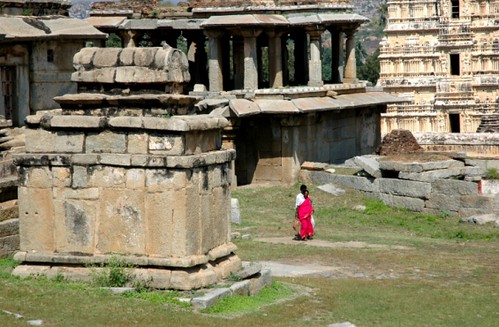
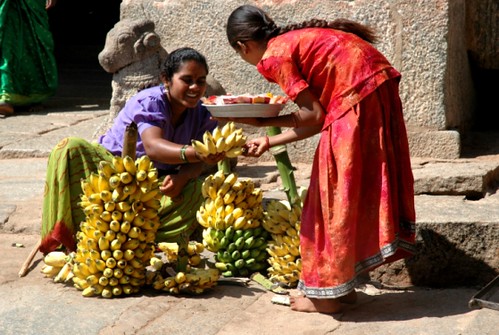
Above: Boulders and Temples by the Tungabhadra; Woman and Coracle; Cormorant Sunning; Virupaksha Temple; Vitthala Temple; Vitthala Temple pillars; Vitthala temple at night; Vitthala Temple at night (2); Vitthala temple detail; Vitthala Temple Visitors.
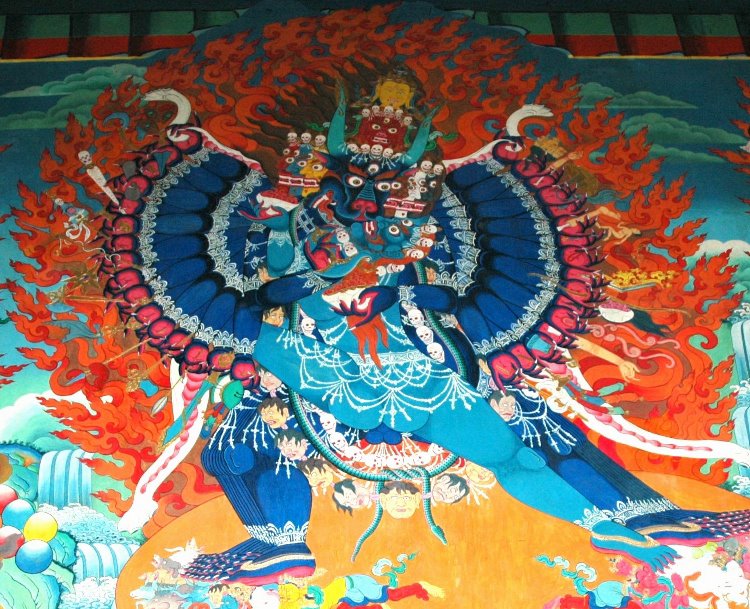
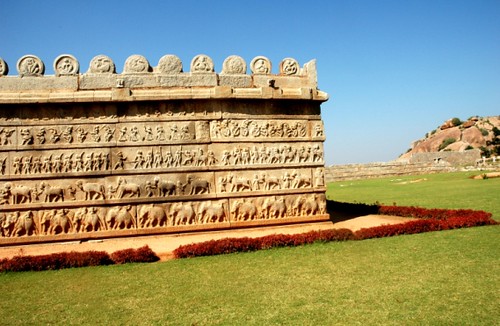
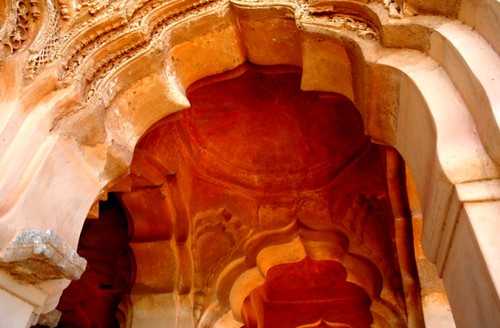
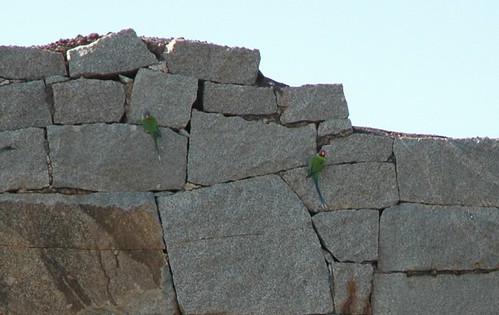
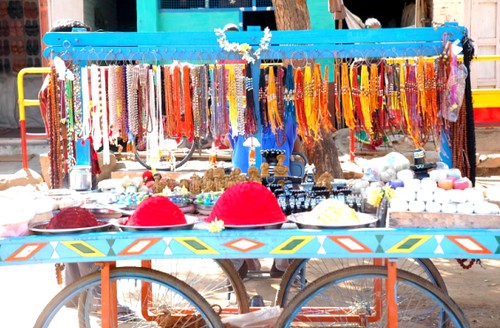
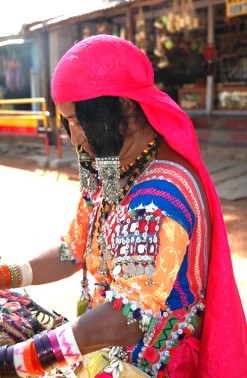
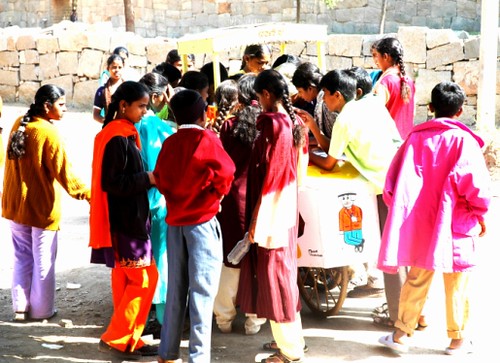
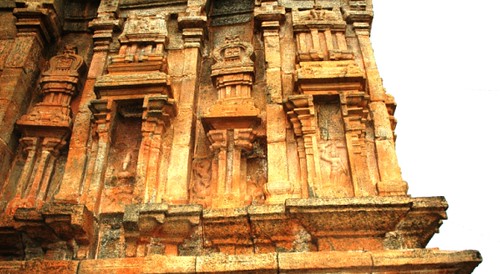
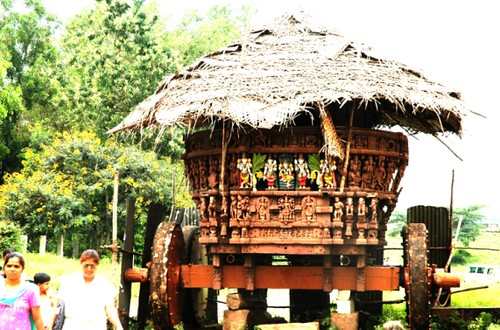
Below: The famous Hampi Rath (Chariot); the outer wall of the Hazara-rama Temple; Hemakuta Temple Complex (1); Hemakuta Temple Complex (2); Lotus Mahal ceiling; Elephants' Stables; Parrots on the walls of the Royal Enclosure; Cart selling Sindoor and Puja supplies; Banana Seller outside Virupaksha Temple; Ugra Narasimha statue; Gypsy woman; Mobbing the Ice-cream man.


Next: Badami.

Monday, November 14, 2005

Road Trip


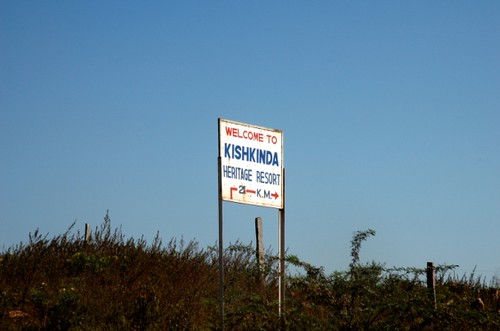
Last weekend we went on a short road-rail trip. First, we took the overnight train from Bangalore to Hospet, which is the gateway to Hampi – i.e. the ruins of the Vijayanagar empire. This is also the historic Kishkinda area -- the kingdom of Bali and the birthplace of Hanuman. The realm was handed over to Sugriva, Bali's brother, by Ram after he killed Bali.

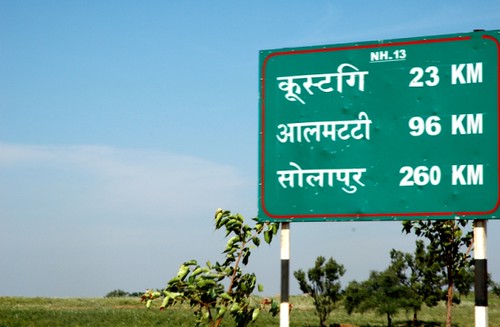
After Hampi, we went by SK’s 4WD up NH-13 and SH-26 from Hospet to Badami, via the Tungabhadra-Sagar Dam, Kustagi and Hungund. The capital of the Chalukyas, Badami is situated at the mouth of a ravine between two rocky hills, into which are hewn syncretic cave temples dedicated to Vishnu, Budhha and Mahavira, the earliest dating to the 6th century.

To return, we bumped over country tracks to Gadag; catching there NH-63 to Koppal and Hospet. ("If you're driving in South India note that NH 63 appears on the map, but does not, in fact, exist" – a helpful note from the indiamike web site.) Finally, we retraced NH-13 to Chitradurg; and took NH-4 back to Bangalore.

Next: Vijayanagar.

Friday, November 11, 2005

Faces: 2

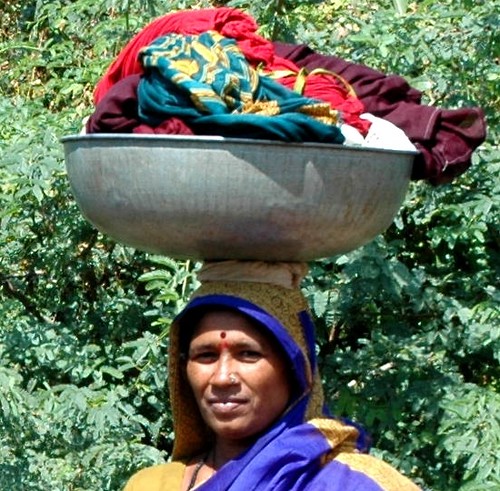
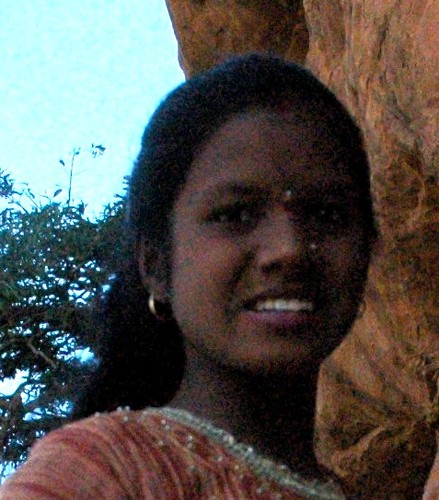
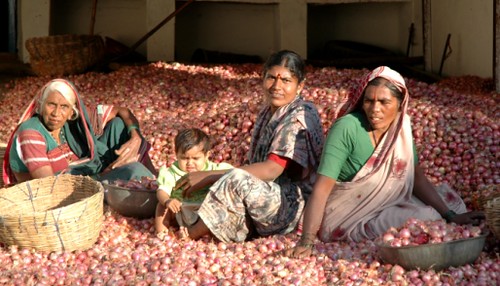
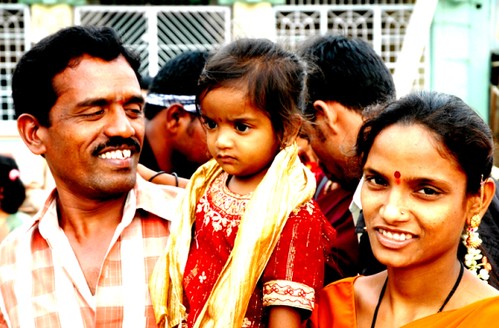
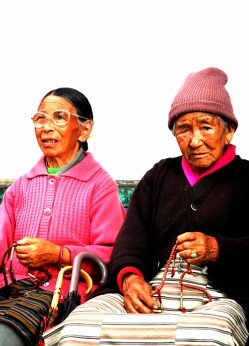
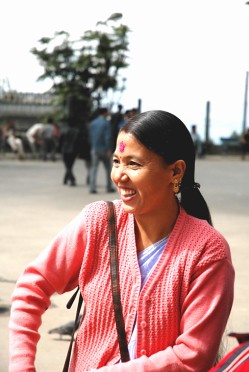
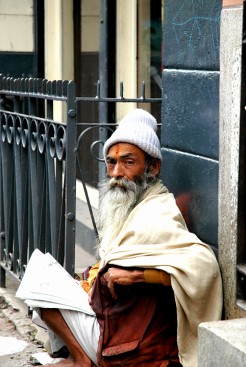
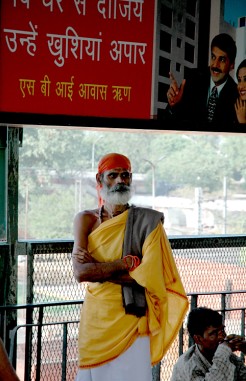
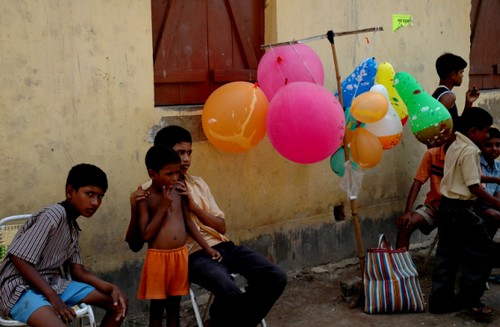
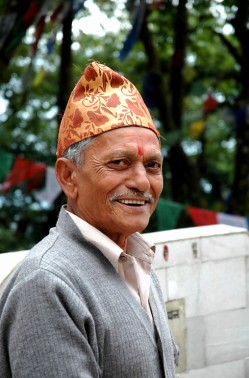
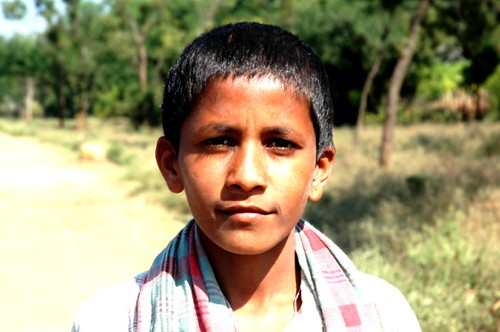
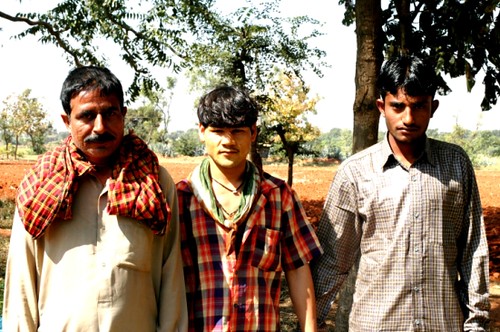
Overlooking the St. John's Hospital complex, I see a constant stream of humanity -- the many races and many nations of India. Here are some more faces from different parts of India.


হে মোর চিত্ত, পুণ্য তীর্থে জাগো রে ধীরে
এই ভারতের মহামানবের সাগরতীরে
হেথায় দাঁড়ায়ে দু বাহূ বাড়ায়ে নমি নরদেবতারে---
উদার ছন্দে, পরমানন্দে বন্দন করি তাঁরে
ধ্যানগম্ভীর এই যে ভূধর, নদী-জপমালা-ধৃত প্রান্তর,
হেথায় নিত্য হেরো পবিত্র ধরিত্রীরে ---
এই ভারতের মহামানবের সাগরতীরে

কেহ নাহি জানে কার আহ্বানে কত মানুষের ধারা
দুর্বার স্রোতে এল কোথা হতে, সমুদ্রে হল হারা
হেথায় আর্য, হেথা অনার্য, হেথায় দ্রাবিড় চীন---

শক-হূণ-দল পাঠান-মোগল এক দেহে হল লীন
পশ্চিমে আজি খুলিয়াছে দ্বার, সেথা হতে সবে আনে উপহার,
দিবে আর নিবে, মিলাবে মিলিবে, যাবে না ফিরে---
এই ভারতের মহামানবের সাগরতীরে

এসো হে আর্য, এসো অনার্য, হিন্দু-মুসলমান
এসো এসো আজ তুমি ইংরাজ, এসো এসো খৃস্টান
এসো ব্রাহ্মণ, শুচি করি মন ধরো হাত সবাকার
এসো হে পতিত, হোক অপনীত সব অপমানভার
মার অভিষেকে এসো এসো ত্বরা, মঙ্গলঘট হয় নি যে ভরা
সবার পরশে পবিত্র করা তীর্থনীরে ---
আজি ভারতের মহামানবের সাগরতীরে

(A rough transliteration of this piece from Rabindranath Tagore's Gitanjali at the bottom of http://www.boloji.com/history/036.htm.)

Tuesday, November 08, 2005

Faces: 1


Mysore


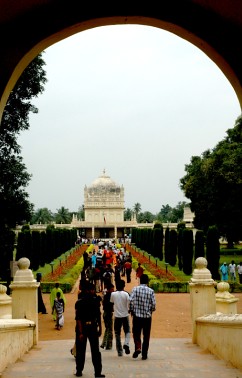
In their first 200 years, the Wodeyars of Mysore were satraps of the Vijayanagar empire; as that empire disintegrated around 1565, Mysore was among the first to declare independence. About 200 years later, Haider Ali rose through the ranks of the armed forces to usurp the throne, though after the fall of Tipu at Srirangapatnam the Wodeyars recovered the rump state of Tipu around Mysore. Their rule continued till India became independent and the monarchical principalities lost their quasi-sovereignty to be incorporated into the Union of India.

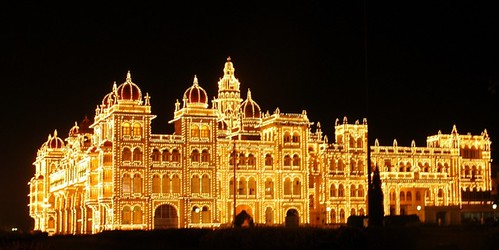
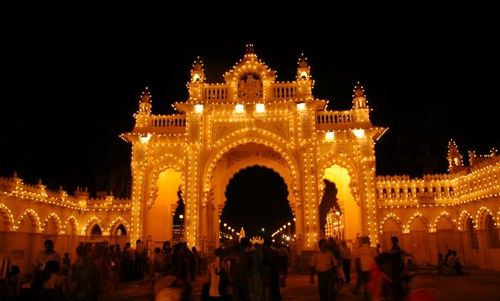
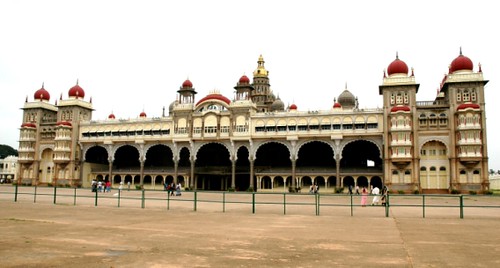
The Mysore Maharaja’s Palace, built by Henry Irwin in 1912 at a cost of Rs. 42 lakh, has a pleasant Indo-Saracenic profile, but is packed choc-a-bloc inside with ‘art’ almost as hideous as the Buckingham Palace – Belgian stained glass, Czech chandeliers, Italian mirrors, French candelabras, stuffed elephants – all under vaulted ceilings made of a particularly noxious shade of turquoise-and-pink plaster. Over-the-top rosewood walls, marble marquetry, images of gods and goddesses that would do any tea-stall calendar proud – all go to show that whatever 500 years of aristocratic breeding produces, it is certainly not taste.


Above: The Mysore Palace.
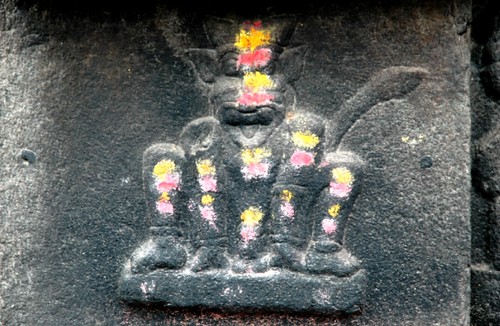
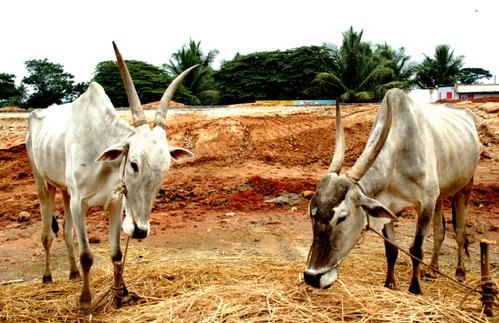
Below: The Mahishasura of Mahishuru (Mysore); Detail from the Chamundeshwari Temple; “What should we do now?”; Local cows
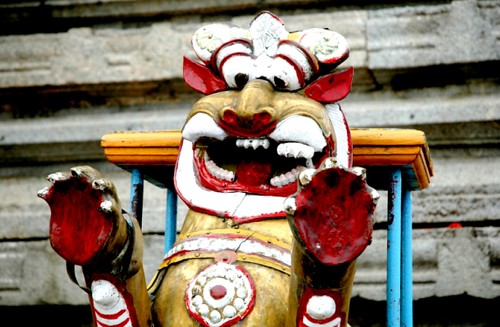
Top: Dussera festival merry-go-round lion.


Monday, November 07, 2005

Srirangapatnam


I cannot express how delighted I am
To hear we have taken Seringapatam
The Chancellor look'd like a frolicsome Ram
To hear we had taken Seringapatam.
Dundas fled from bottle, from chicken and ham
To Windsor to tell of Seringapatam.
Will Pitt eat a cake with some raspberry jam
When told we had taken Seringapatam.
The Prince gave a nod to his Porter big Sam
You hear we have taken Seringapatam.
We are happy to find in this Victory sham,
Not an Englishman fall at Seringapatam.
The Vestal it seems had arrived in the Cam
With the news of the taking Seringapatam.
The mighty Tipoo from a battering ram
Got shot in the thigh at Seringapatam.
Pagodas, and cannon, beef, mutton and lamb,
Were found in the streets of Seringapatam.
Lord Cornwallis bestow'd on each Soldier a Dram,
For his gallant attack on Seringapatam.
Great George look'd as sapient as old Abraham
When he heard we had taken Seringapatam
The Stocks were forc'd up five per cent by the flam,
Of our having taken Seringapatam.
Now the People of England most heartily damn
The Wonderful News from Seringapatam!


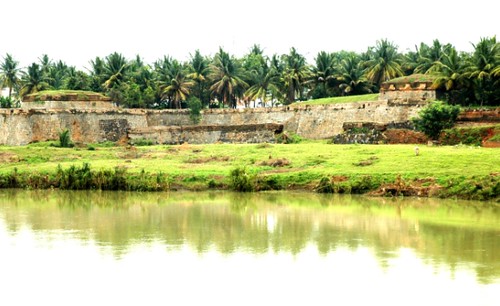
Srirangapatnam lies on an island in the river Cauvery, and is the site of an immensely old stone temple dedicated to Lord Ranganatha (Vishnu) as well as the ruined capital of Haider Ali and his son Tipu Sultan. The temple was built by the Gangas in the 9th century AD, though the strategic nature of the island had made it into a religious refuge perhaps as much as a thousand years before this date. In the 10th-16th centuries, the temple was fortified and improved upon architecturally by the Hoysala and Vijaynagar rulers, resulting in a medley of styles. Hyder Ali is said to have made endowments to this temple, and Tipu is said to have prayed at the temple himself.


The town of Srirangam near Tiruchirapalli in Tamil Nadu is similar in that it is also on an island formed by the river Cauvery, and is the site of another important shrine dedicated to Lord Ranganatha. Along with Shivanasamudram and Srirangam, Srirangapatna forms a chain of three Ranganatha deities referred to as Adiranga (Srirangapatnam), Madhyaranga and Antyaranga (Srirangam) respectively; if one can visit all three in a day one apparently earns tremendous punya.


The first phase of the British conquest of India was driven by the greed of the officials of the East India Company. After Robert Clive had enticed Mir Jafar to betray Siraj-ud-daula at Plassey in 1757 and set up Mir Jafar on the throne of Bengal, he paid out £1,250,000 to himself and his cronies from the treasury of Bengal. Compounding this at 5% annually, the booty in today’s terms is about $300 billion, or Rs. 1350-lakh lakhs. Clive himself is supposed to have been astonished by his own ‘moderation’ in the whole exercise. Back home, the British people were often scandalized and jealous of these ‘nabobs’, “but in India where revenue extraction was the main business of government and where personal fortunes were not readily distinguished from official receipts, British rapacity attracted much less attention than it did in England.” (John Keay: “India, A History.”)

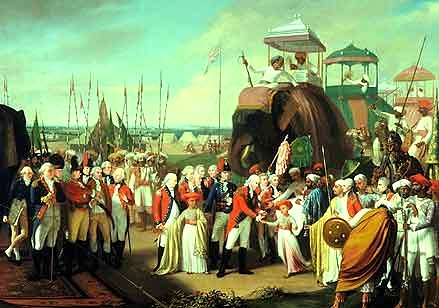
The second phase was perhaps driven by ambition. Cornwallis had arrived in India in 1786 from the disaster of the American revolution, where through a strategic blunder at Yorktown he had been compelled to surrender to Washington. The state of Anglo- Mysore relations seemed to be right for a reputation-redeeming war.

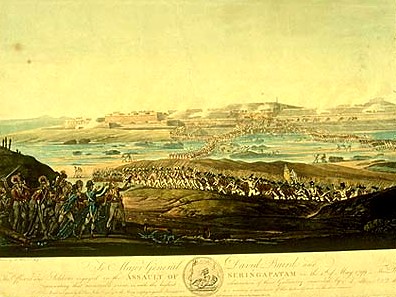
In the First Mysore War (1767) Haider Ali had driven the British back out of the Carnatic, and a 19 year-old Tipu had raided the very streets of Company-held Madras. In the Second Mysore War (1780-84), the British had attacked Mysore on two fronts, from Madras and from Bombay. The 4000-strong British invading force was annihilated, and its commander had to run away leaving his personal effects behind on field of battle. Into this situation, ripe, it would seem, for a turnaround, stepped Cornwallis. For the Third Mysore War, he stitched together an alliance with two sworn enemies of Mysore – the Marathas of Pune and the Nizam of Hyderabad, and besieged Srirangapatnam with 20,000 troops. Outnumbered, Tipu hel